

Omega Seamaster Replica vs Original: What Experts Actually Check
Nine tests. That is all it takes to separate an omega seamaster replica vs original with near-certainty. Not three, not twenty — nine specific checkpoints that cover the dial, bezel, case, movement, bracelet, and lume. Some require a loupe. Some require your fingertips. One requires complete darkness. This guide walks through each test with the level of detail that forum moderators and watchmakers use when authenticating Seamasters across the table.
In This Article
- Test 1: The Wave Dial — Depth Under Magnification
- Test 2: Ceramic Bezel — Color Saturation and Fill
- Test 3: Weight — The 4-Gram Question
- Test 4: Caseback — The Movement Tells the Truth
- Test 5: Helium Escape Valve — Form vs Function
- Test 6: Bracelet and Clasp — Where Fingers Tell More Than Eyes
- Test 7: Dial Text — “Seamaster” and the Depth Rating
- Test 8: Lume — The Dark Room Reveal
- Test 9: Serial Number and Case Engravings
- All 9 Tests: Summary Grid
- Beyond the Diver 300M: Other Seamaster Models
A decade ago, telling an omega seamaster fake vs real apart took about three seconds. The dials were flat, the bezels were aluminum, the casebacks had engravings that looked like they were printed with a dot-matrix printer. That era ended when VS Factory released their Seamaster Diver 300M with a clone co-axial movement and laser-cut wave dials. The gap between genuine and clone narrowed to a point where even experienced collectors pause during photo comparisons. I ranked the VSF Seamaster 300M as the best omega replica available — a 9.5 out of 10. That 0.5 deduction exists because differences remain. Subtle, specific, and measurable.
This guide focuses on the Seamaster Diver 300M (Ref. 210.30.42.20.06.001 and variants) because it represents the highest-quality clone and therefore the hardest comparison. If you can spot the differences on a VSF Diver 300M, you can spot them on any omega seamaster clone. The principles transfer to every Seamaster variant — Aqua Terra, Planet Ocean, and even the Seamaster 300 Heritage.
Test 1: The Wave Dial — Depth Under Magnification
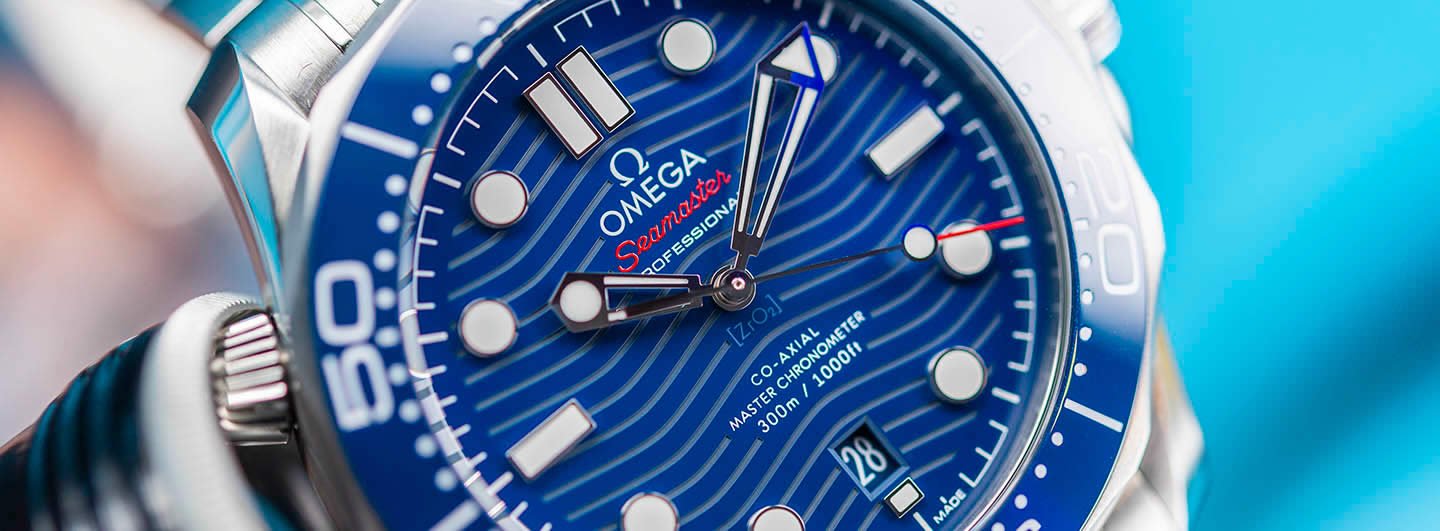
The wave pattern on the Seamaster Diver 300M dial is the first checkpoint for any omega seamaster replica vs original comparison. Omega uses laser ablation to cut grooves into a ceramic dial blank, creating a three-dimensional wave texture visible from arm’s length. The genuine dial shows waves with consistent depth — roughly 0.08mm — and clean edges that catch light uniformly across the entire surface.
The VSF replica uses a similar laser process. Under normal viewing distances (30cm+), the wave patterns are virtually identical. The tell appears under 10x magnification: genuine waves have slightly sharper crests with microscopically cleaner edges. The VSF waves show marginally softer transitions — the valleys blend into the peaks rather than cutting sharply. On a blue dial, this difference vanishes completely under indoor lighting. On the grey/silver dial variant, it becomes slightly more visible because the lighter color accentuates surface texture.
Expert Note: If you are checking omega seamaster real vs fake and the dial has zero wave depth — the waves look printed rather than engraved — you are not looking at a VSF or any top-tier clone. You are looking at a $50-80 DHGate piece. Genuine and quality clones both have tactile, three-dimensional wave grooves that catch a fingernail.
Test 2: Ceramic Bezel — Color Saturation and Fill
Omega fills the bezel markings on the Diver 300M with a proprietary white enamel that sits flush inside laser-engraved ceramic channels. The result: crisp white numbers against deep blue (or black) ceramic, with a satin surface finish that resists fingerprints. Tilt the genuine bezel under direct sunlight and the enamel reflects light evenly without any bubbles or voids.
VSF gets this 95% right. The ceramic color matches well — the blue reads correctly in daylight and artificial light. The enamel fill on the numerals is clean. Where the tell appears: the first 15-minute markers (the diving scale between 12 and 3 o’clock). On some VSF batches, the fill in these small triangular markers is slightly less precise — a microscopic overfill that extends 0.1mm beyond the engraved channel. Visible only under a loupe at 5x or higher.
Test 3: Weight — The 4-Gram Question
The genuine Seamaster Diver 300M on a steel bracelet weighs approximately 172 grams. The VSF clone weighs 168 grams. A four-gram difference — less than the weight of a sugar packet — that no human wrist can detect. Both use 316L stainless steel for the case and bracelet. The weight gap comes from internal architecture: the genuine Cal.8800 has denser components and more material in the rotor assembly.
This is a useful omega seamaster fake vs real test only with a precision scale. Kitchen scales usually lack the 0.1g resolution needed. If you compare an omega seamaster replica vs original by hand — picking up each alternately with eyes closed — neither watch enthusiasts nor professional watchmakers reliably identify which is which. The test matters for authentication services that use documented weight specifications, not for personal assessment.
Test 4: Caseback — The Movement Tells the Truth
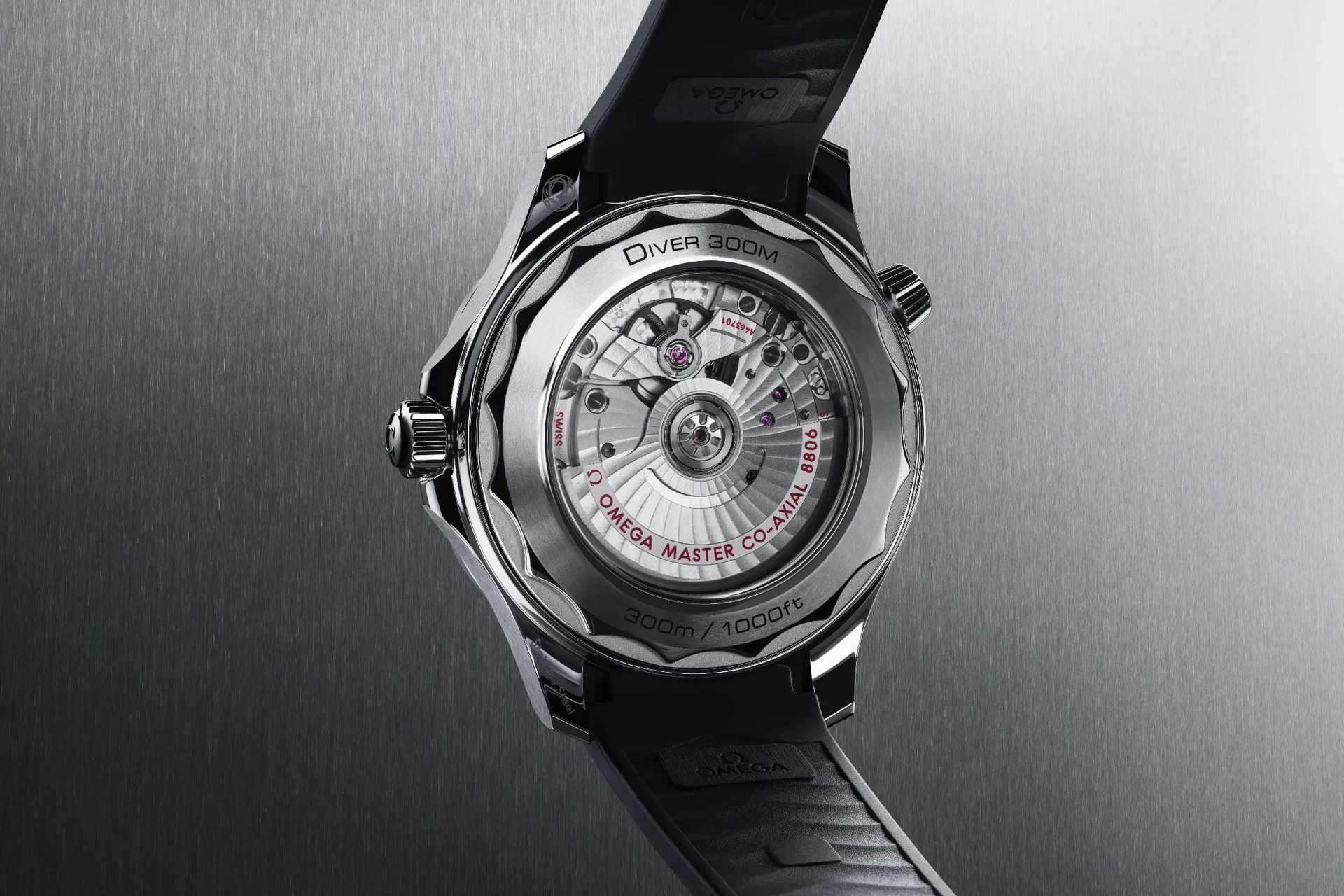
This is where the real comparison begins. Flip the watch over, and the transparent sapphire caseback reveals the movement — the single most significant checkpoint in any omega seamaster replica vs original assessment. Omega’s Cal.8800 Master Chronometer features a rhodium-plated bridge architecture with a distinctive two-level design, Geneva waves on the main plate, and a branded rotor with “OMEGA” and “Co-Axial Master Chronometer” text. The finishing under magnification shows perfectly straight côtes de Genève with consistent spacing.
The VSF DD8800 clone replicates this architecture with genuine accuracy. The bridge layout matches — two-level construction, correct screw placement, and properly shaped balance cock. The rotor text is legible and correctly positioned. Three tells separate them under magnification. First: the Geneva waves on the genuine have sharper, more defined edges. The clone waves are slightly softer — a polishing depth issue. Second: the “OMEGA” text on the rotor has marginally thicker lettering on the clone (0.05mm wider per character). Third: the genuine movement runs at 25,200 bph with METAS-certified accuracy of +0/+5 seconds per day. The clone runs at the same beat rate but typically keeps time at +4 to +8 seconds per day — good, but outside the genuine’s specification window.
Test 5: Helium Escape Valve — Form vs Function
At 10 o’clock on the case sits the helium escape valve (HEV). On the genuine Seamaster, this valve serves a real function during saturation dives: it allows helium molecules that penetrate the case under extreme pressure to escape safely during decompression. The valve unscrews with a tactile click and has a spring-loaded mechanism inside.
On the VSF omega seamaster clone, the HEV is cosmetically correct — same size, same crown shape, same scalloped edge. It unscrews the same way. The difference: the internal spring mechanism is simplified. It does not create the same positive “click” when closing, and it does not actually function as a pressure release valve. Under normal wear — including hand washing, rain exposure, and casual water contact — this makes zero practical difference. The HEV on the genuine is designed for saturation diving at 300+ meters. Nobody wearing a genuine Seamaster 300M uses the valve either, unless they are a commercial diver. The tell here is purely mechanical: close the valve on the genuine, and you feel a firm snap. Close it on the clone, and it threads smoothly but without that final detent.
Test 6: Bracelet and Clasp — Where Fingers Tell More Than Eyes
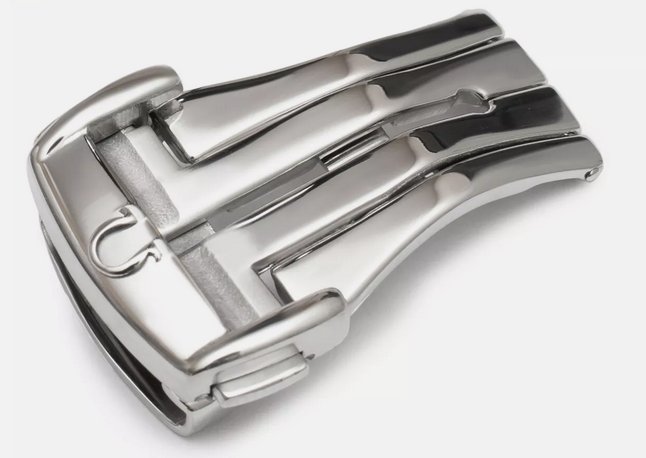
Pick up the genuine Seamaster bracelet and shake it gently. Each link moves with a dampened, tight tolerance — no rattling, no lateral play. The brushed surfaces on the outer links contrast sharply with the polished center links. Transitions between brushed and polished surfaces are crisp — you can feel the boundary with a fingertip. The deployant clasp opens with a firm press on two side buttons and closes with a satisfying double-click.
The VSF bracelet matches this quality at about 92%. The link tolerances are tight — no rattle on most pieces. The brushed-to-polished transition is clean. Two areas separate them. The adjustable diver’s extension in the clasp — the feature that lets you lengthen the bracelet over a wetsuit — operates slightly less smoothly on the VSF. Not stiff, just less butter-smooth. And the solid end links (SELs) where the bracelet meets the case: genuine SELs sit with near-zero gap. VSF SELs on some batches show a 0.1-0.2mm hairline gap visible under magnification. On the wrist, at normal viewing distance, both differences disappear.
Tip: When checking how to spot fake omega seamaster pieces, always test the bracelet first. It is the component with the widest quality range across manufacturers. A genuine bracelet weighs 88-92g on its own (without the head). If the bracelet feels light, rattles, or has visible gaps between links — the watch is not from a top-tier factory regardless of how the dial looks.
Test 7: Dial Text — “Seamaster” and the Depth Rating
Six lines of text sit below the Omega logo on the Seamaster 300M dial: “Seamaster” at 12, then “Professional” below it, “Diver 300M” further down, “Co-Axial Master Chronometer” in the lower half, “42 MM” beneath that, and “Chronometer Officially Certified” running along the bottom. Every line uses a specific font weight, size, and exact position relative to the hour markers.
The VSF omega seamaster replica vs original difference here sits in the “Co-Axial Master Chronometer” line. On some VSF batches, the “o” in “Chronometer” sits 0.05mm higher than adjacent characters. Under a jeweler’s loupe at 10x, this micro-misalignment becomes visible. At normal reading distance — even at 15cm — it is invisible. The rest of the text lines match the genuine in font weight, spacing, and position. Earlier VSF batches (2023-2024) had slightly bolder “OMEGA” logos; current 2025-2026 production corrected this to match genuine thickness.
Test 8: Lume — The Dark Room Reveal
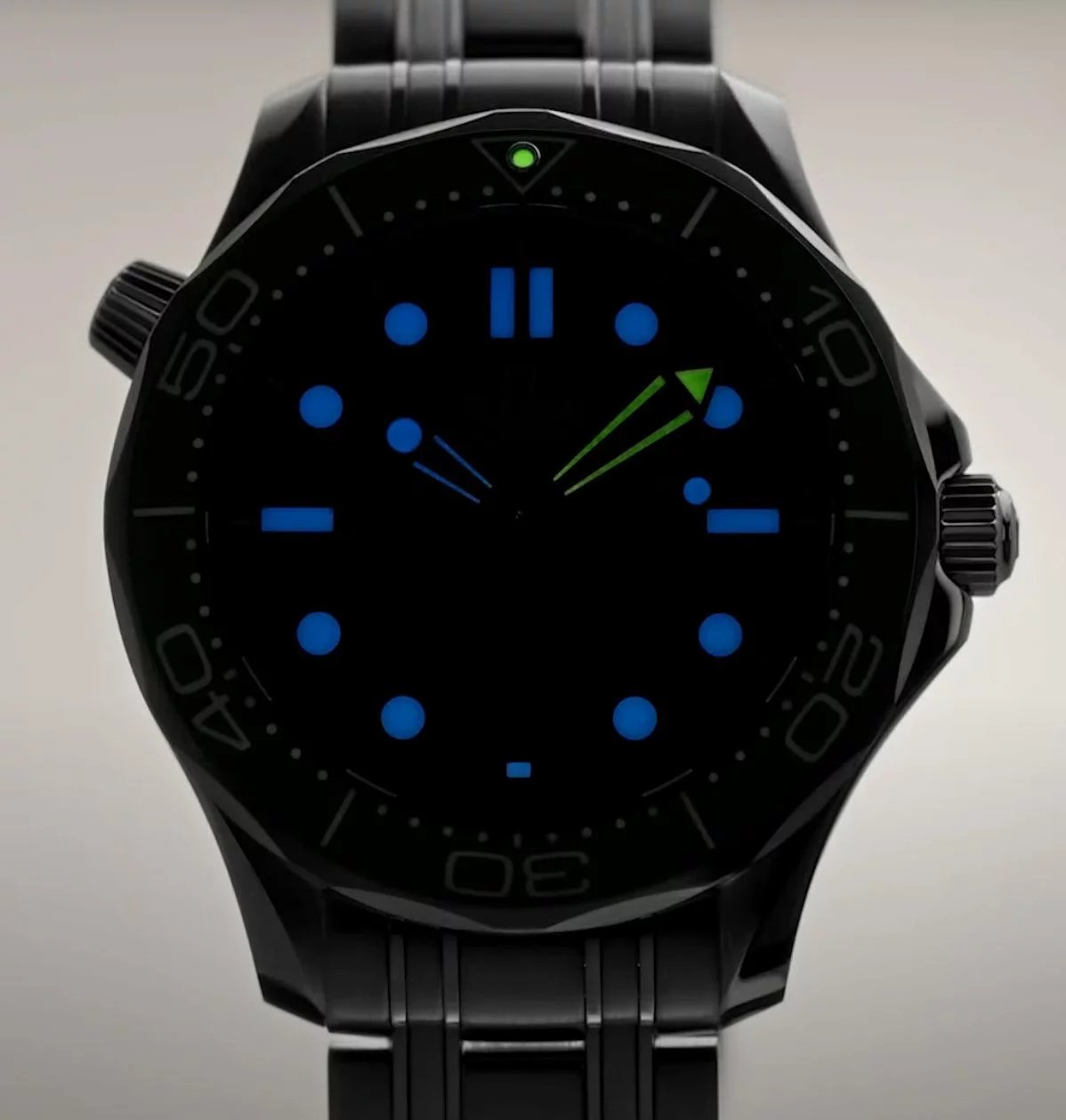
Turn off the lights and hold the watch under a UV lamp for 30 seconds. The genuine Seamaster Diver 300M uses Super-LumiNova grade X1 — a proprietary compound that glows bright green with exceptional longevity. After 60 minutes in darkness, genuine Super-LumiNova X1 is still clearly readable. The hands glow as brightly as the hour markers, creating uniform visibility across the entire dial.
The VSF clone uses standard-grade luminous compound. The initial charge brightness — that first burst after UV exposure — is comparable. The fade rate is not. After 30 minutes, VSF lume has dimmed by roughly 40%, while genuine X1 holds about 75% brightness. After 60 minutes, the difference is obvious: genuine is still clearly readable, the clone requires dark adaptation to read the time. The lume also reveals another omega seamaster fake vs real tell: the color. Genuine X1 glows a cool blue-green. VSF lume glows a warmer, slightly yellowish green. Under UV directly, the genuine appears whiter, the clone appears more blue.
Test 9: Serial Number and Case Engravings
Every genuine Seamaster carries a unique serial number engraved between the lugs at 6 o’clock. Omega uses laser engraving that produces characters with consistent depth, sharp edges, and perfectly uniform spacing. The reference number appears between the lugs at 12 o’clock. Both engravings are recessed into the metal — running a fingertip across them, you feel the depressions clearly.
The VSF clone reproduces these engravings. The reference number is correct for the model being replicated. The serial number is present but not unique — VSF uses a rotating set of serial numbers across their production. The how to spot fake omega seamaster approach here requires checking the serial against Omega’s database. A watchmaker or Omega boutique can verify in seconds. The physical quality of the engraving — depth, font, spacing — is close enough on VSF pieces that visual inspection alone cannot distinguish them. Budget clones from ZF or unnamed factories show noticeably shallower engravings, sometimes using acid etching instead of laser work.
Critical: Serial number verification is the only definitive test. Every other checkpoint on this page reveals differences that require magnification, instruments, or side-by-side comparison. A serial number check against Omega’s records gives a binary answer: genuine or not. If you are authenticating an omega seamaster real vs fake for purchase, start with the serial.
All 9 Tests: Summary Grid
The table below consolidates every test into a quick-reference grid. Green checks mean the VSF clone matches closely enough that the test is inconclusive without instruments. Orange means the difference is detectable with a loupe or specific tool. Red means the test reliably separates genuine from clone.
Beyond the Diver 300M: Other Seamaster Models
The nine tests above apply to the Diver 300M specifically, but the principles work across the entire Seamaster collection. The Aqua Terra uses a teak-textured dial instead of wave patterns — check groove depth and consistency. The Planet Ocean has a liquid metal bezel with different fill characteristics. The Seamaster 300 Heritage uses a sandwich dial construction where the tells shift to lume marker alignment.
For non-Seamaster models — the Speedmaster and Constellation — different tells dominate. The Speedmaster comparison hinges on subdial spacing and case thickness rather than dial texture. The Constellation focuses on the polished griffes and integrated bracelet transitions. Each collection has its own fingerprint, but the methodology stays constant: start with what you can see, move to what you can feel, finish with what requires instruments.
Frequently Asked Questions
Can a jeweler tell omega seamaster replica vs original?
A jeweler with Omega training and a loupe — yes, in most cases. They check movement finishing, serial number databases, and specific reference-number details. A general jeweler without Omega-specific experience may struggle with VSF pieces because the external quality exceeds what most jewelers expect from replicas. The caseback and movement finishing under 20x magnification remain the most reliable professional checkpoints.
Which single test is most reliable for spotting a fake Seamaster?
Serial number verification against Omega’s database. Every other test on this page has edge cases, batch variations, or requires specialized equipment. The serial check is binary: either the number exists in Omega’s records and matches the model, or it does not. For a quick physical test without database access, lume longevity (Test 8) is the most reliable — charge both watches under UV, wait 45 minutes in darkness, and the difference becomes obvious.
Has the gap between omega seamaster fake vs real narrowed over time?
Significantly. In 2020, there were roughly 15 visible tells on any Seamaster clone. By 2023, VS Factory reduced that to 7-8. The current 2025-2026 VSF production has narrowed it to 3-4 tells that require magnification to detect. The biggest single improvement was the DD8800 movement — before it existed, every Seamaster clone used an obviously different movement visible through the caseback.
Do photos work for comparing replica vs original?
Only under controlled conditions. Forum comparison photos using identical lighting, angle, and camera settings can reveal differences in dial color, text sharpness, and bezel fill. Casual photos — different angles, different lighting, different phones — are unreliable. Most viral “can you tell which is fake?” posts use deliberately different conditions to make the comparison impossible. For honest assessment, both watches need identical studio conditions.
Is the magnetic resistance test useful for authentication?
In theory — yes. Genuine Seamasters certified as Master Chronometers resist magnetic fields up to 15,000 gauss thanks to silicon components and anti-magnetic alloys. No clone replicates this shielding. In practice, you need a controlled magnetic field generator to test this properly, which is not something most people own. Placing a strong neodymium magnet near the caseback and watching for rate changes is an imprecise but functional version of this test — a genuine Master Chronometer shows zero effect, while a clone may gain or lose time temporarily.
The Honest Conclusion
Nine tests, and only two produce reliable results without specialized equipment: lume longevity and serial number verification. The remaining seven require magnification, precision scales, or side-by-side genuine comparison to draw conclusions. That is the current state of the omega seamaster replica vs original scene in 2026. VS Factory’s Diver 300M has pushed the gap so narrow that most traditional spotting methods — the ones that worked five years ago — are now obsolete. The wave dial is real, the ceramic is correct, the weight matches, and the movement architecture mirrors the genuine. What separates them lives in the finishing details: micron-level differences that exist under loupes but disappear on the wrist. Browse the full Seamaster collection to see every reference and color variant available from top-tier factories.