
Omega Watch Size Guide: Every Model Measured for Your Wrist
This omega watch size guide exists because a 43.5mm Planet Ocean on a 6-inch wrist can look like a dinner plate. Case diameter alone tells you nothing. Lug-to-lug span determines whether a watch actually fits. Thickness determines whether it slips under a cuff or sits on top of it like a tumor. And weight determines whether you forget you’re wearing it or feel it pulling your arm down by 3 PM. Every Omega model, every dimension, one guide.
How to Measure Your Wrist
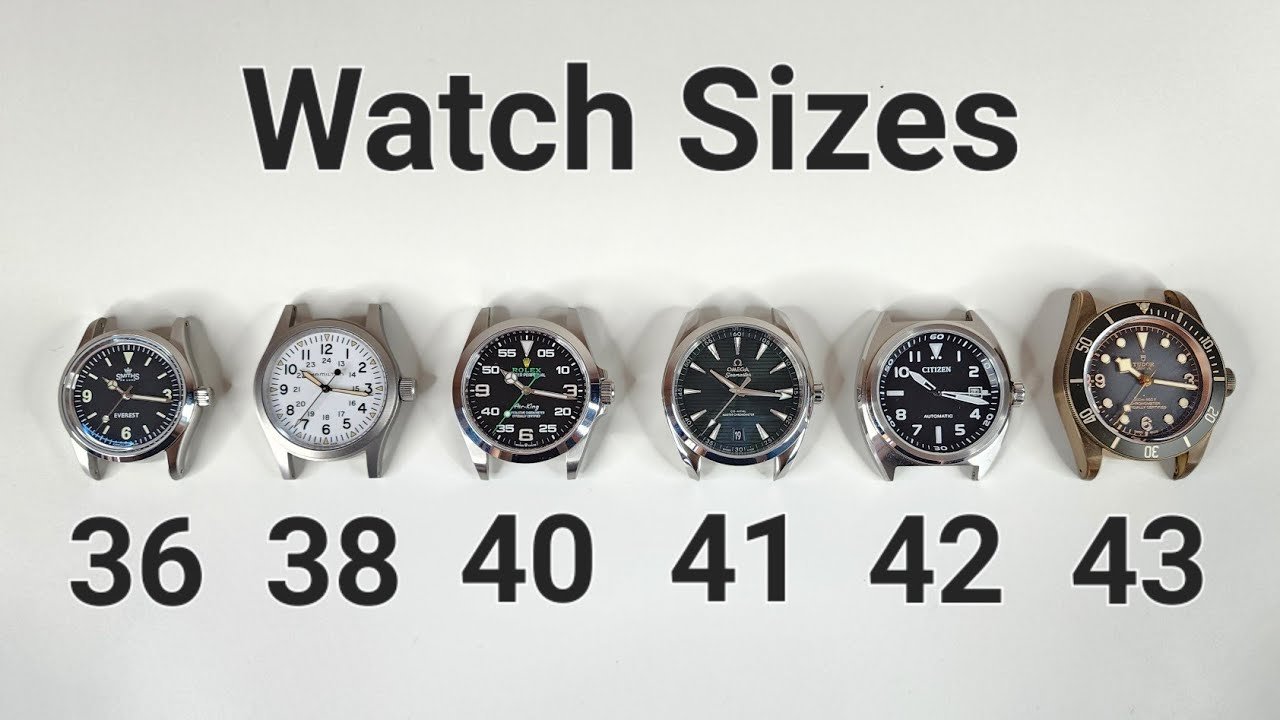
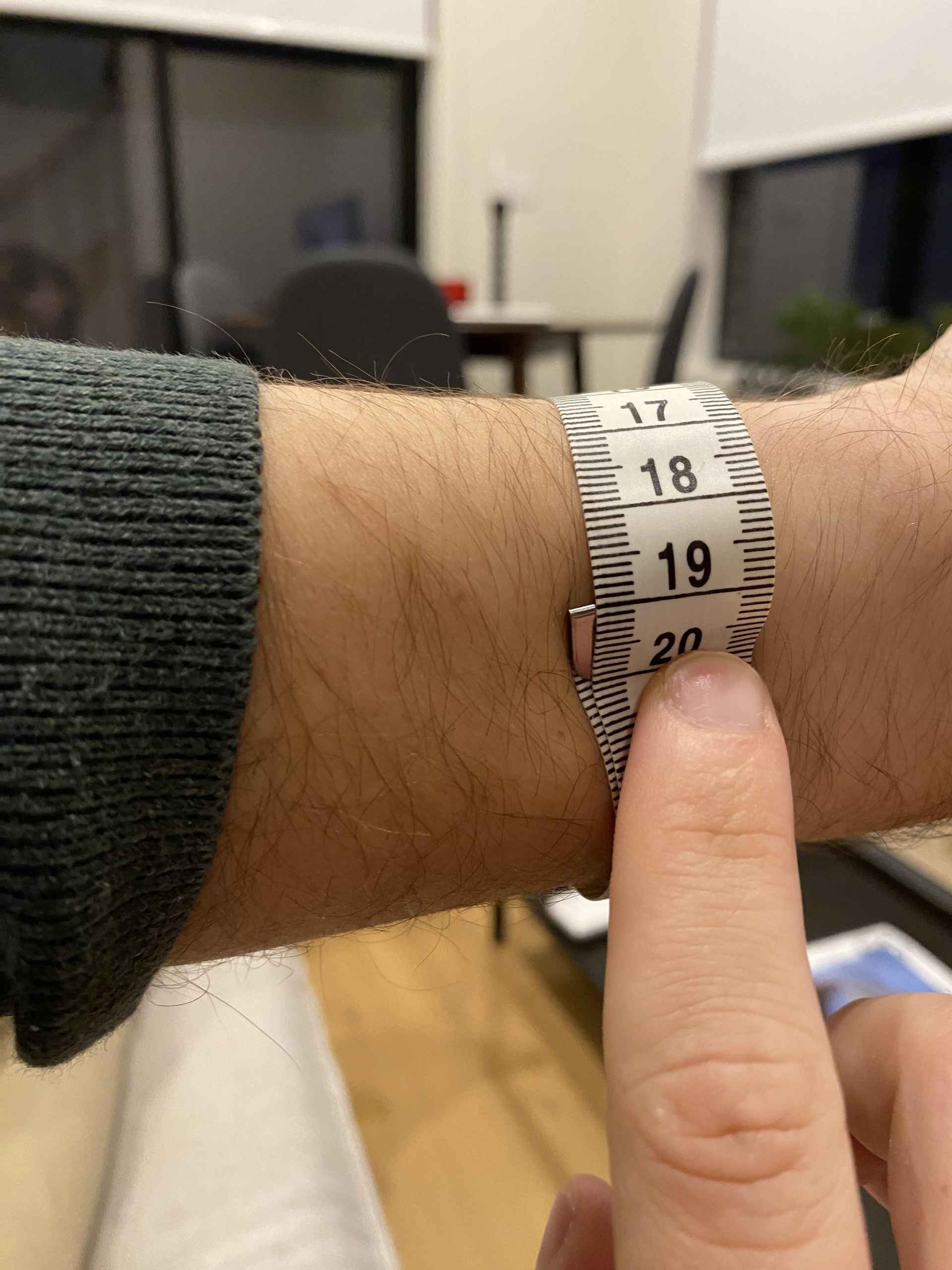
Before looking at any omega watch sizes, measure your wrist. Use a flexible tape measure or a strip of paper wrapped around your wrist just below the wrist bone (the protruding bump on the outside). Mark where it overlaps, then measure flat with a ruler. That number is your wrist circumference.
One rule overrides everything: the watch lugs should never extend past the edges of your wrist when viewed from above. If the lug tips hang over the sides — the watch is too big. Period. This is why lug-to-lug measurement matters more than case diameter.
In This Article
- How to Measure Your Wrist
- The Master Size Chart: Every Omega Model
- Lug-to-Lug: The Number That Actually Matters
- Thickness: The Cuff Test
- The Omega 38mm vs 41mm Decision
- Model Recommendations by Wrist Size
- Weight and Comfort: The Full-Day Factor
- The “Wears Bigger / Wears Smaller” Factor
- Clone Sizing: Does It Match Genuine?
- FAQ: Omega Watch Size Guide
The Master Size Chart: Every Omega Model
This is the core of the omega watch size guide — every current Omega collection measured in the three dimensions that actually matter: diameter, lug-to-lug, and thickness.
Key Insight: The Planet Ocean is the outlier. At 51mm lug-to-lug and 16.1mm thick, it requires a wrist over 7 inches to look proportional. The Speedmaster, despite being 42mm, has a shorter 47mm L2L — it wears much smaller than the Seamaster 300M because of the shorter lugs.
Lug-to-Lug: The Number That Actually Matters
Case diameter is what marketing departments advertise. Lug-to-lug is what actually determines fit. This omega watch size guide emphasizes L2L because it’s the dimension that decides whether a watch overhangs your wrist.
How to use L2L: measure the flat top surface of your wrist (not circumference). Use a ruler laid across the wrist at the widest point. This is your “flat wrist width.” The lug-to-lug of your watch should be less than or equal to this number. Most men have a flat wrist width of 55-65mm.
Example: a 6.5″ wrist typically has about 55mm flat width. The Seamaster 300M’s 50mm L2L fits perfectly — 5mm of clearance. The Planet Ocean’s 51mm also technically fits but sits right at the edge with almost no clearance, making it look like a maximum-size watch. The Aqua Terra 38mm at 44mm L2L gives generous 11mm clearance — noticeably smaller and more proportional.
Thickness: The Cuff Test
This is the silent killer of watch-wardrobe compatibility. You buy a watch online, it fits your wrist diameter, looks great… and then it won’t slide under your shirt sleeve. Thickness is the omega wrist size factor most people ignore.
If you wear dress shirts daily, anything over 13mm creates a visible bump under the cuff. The Speedmaster at 13.6mm sits right at the borderline — it works with relaxed-fit shirts but creates a noticeable bulge under slim-cut cuffs. The Seamaster 300M at the same 13.6mm faces the same issue. Both are better suited to business-casual than formal wear.
The Omega 38mm vs 41mm Decision
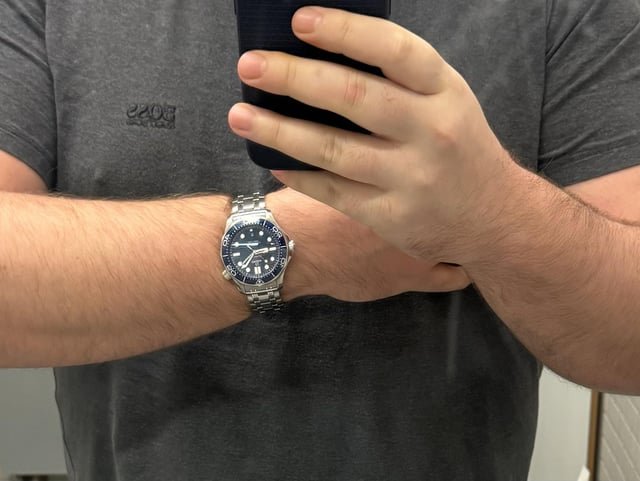
This omega 38mm vs 41mm debate comes up constantly with the Aqua Terra and Constellation. Both collections offer these two sizes, and the choice isn’t as straightforward as “smaller wrist = smaller watch.”
The 38mm case: Wears closer to vintage proportions. Sits flat on the wrist with minimal overhang. The dial proportions feel balanced — indices have room to breathe. Under a cuff, 38mm disappears entirely. Best for wrists 6-7 inches and anyone who values subtlety over presence.
The 41mm case: Modern proportions. Fills the wrist more completely. The dial shows more detail and the hour markers appear larger. This is the size most people expect when they think “watch.” Best for wrists 6.75-8 inches and anyone who wants their watch to be noticed.
The catch: both sizes use different movements on the genuine models. The 41mm Aqua Terra and Constellation use Cal.8900 (twin barrel), while the 38mm uses Cal.8800 (single barrel). Clone-wise, this means 41mm versions sometimes get the DD8900 and 38mm gets the DD8800 — though some factories use the DD8800 for both sizes.
Sizing Hack: Cut a circle from cardboard at 38mm and another at 41mm. Tape them to your wrist. Wear them around the house for 30 minutes. The one that stops looking “wrong” first is your size. This $0 test beats overthinking the numbers.
Model Recommendations by Wrist Size
Let’s make this omega watch size guide actionable. Here’s my specific recommendation for each wrist size range:
The omega case size chart data shows that Omega designs primarily for the 6.5-7.5″ wrist range. Most models cluster around 39-42mm — the globally popular size bracket. If you’re outside this range in either direction, your options narrow but don’t disappear.
Weight and Comfort: The Full-Day Factor
Numbers people forget to check when studying omega watch sizes: weight. A watch might look perfect on your wrist for a photo but become annoying after four hours of wear. Here’s how weight translates to comfort:
- Under 120g (leather strap): Barely noticeable. De Ville Prestige, De Ville Tresor. You’ll check if you’re still wearing it
- 120-150g: Comfortable all day. Aqua Terra, Constellation, Speedmaster. The sweet spot for most people
- 150-180g: Present but not heavy. Seamaster 300M. You always know it’s there — which some people enjoy
- 180g+: Noticeably heavy. Planet Ocean on steel. Some love the “solid metal” feeling. Others find it tiring by afternoon
Bracelet vs strap changes everything. The Seamaster 300M drops from 178g (bracelet) to about 125g (rubber strap). That 53g difference transforms the wearing experience. If a watch feels too heavy on bracelet, try the rubber or leather strap version before giving up on the model entirely.
The “Wears Bigger / Wears Smaller” Factor
Not all 42mm watches wear the same. Design elements that make a watch wear larger or smaller than its listed diameter — critical for this omega watch size guide:
Wears bigger than listed:
- Integrated bracelets (Constellation) — continuous metal extends visual size
- Light-colored dials — appear to expand visually
- Thick cases (Planet Ocean at 16.1mm) — height adds to perceived size
- Wide bezels — extend the visual diameter beyond the dial
Wears smaller than listed:
- Dark dials — appear to recede visually
- Thin cases (De Ville at 9.3-10.2mm) — low profile reduces presence
- Short lugs (Speedmaster) — 47mm L2L on a 42mm case
- Leather straps — less visual bulk than metal bracelets
The Constellation 39mm on integrated bracelet wears like a 41mm conventional watch because the bracelet extends the visual footprint. Conversely, the Speedmaster 42mm wears like a 40mm because of its compact lug design. These optical effects matter more than raw numbers for on-wrist perception.
Clone Sizing: Does It Match Genuine?
A common concern with the omega watch size guide: do clone dimensions match genuine? In general, yes — top-tier factories maintain dimensional accuracy within tight tolerances:
- Diameter: Typically within ±0.2mm of genuine. Undetectable on wrist
- Lug-to-lug: Within ±0.5mm. Again, invisible in practice
- Thickness: Within ±0.3mm on most models. The De Ville Tresor clone is the exception — about 0.7mm thicker than genuine (10mm vs 9.3mm)
- Weight: Within ±5-10g on steel models. Close enough that only a scale reveals the difference
The takeaway: if a genuine 42mm Seamaster fits your wrist in photos and reviews, the clone version will fit identically. You can use genuine Omega sizing information to make clone purchasing decisions with confidence.
FAQ: Omega Watch Size Guide
What’s the best Omega size for a 6.5-inch wrist?
39-41mm is your sweet spot. The Aqua Terra 38mm sits perfectly, the Speedmaster 42mm works because of its short lugs, and the Constellation 39mm is ideal. The Seamaster 300M at 42mm/50mm L2L is at the upper limit but still works for most 6.5″ wrists. Skip the Planet Ocean — it’ll overpower your wrist.
Is 42mm too big for small wrists?
It depends on lug-to-lug, not diameter. The Speedmaster is 42mm but only 47mm L2L — it fits 6.25″+ wrists fine. The Seamaster 300M is also 42mm but 50mm L2L — a bigger footprint. For wrists under 6.25″, 42mm with 50mm+ L2L will look oversized. The omega case size chart shows that 42mm isn’t one-size-fits-all.
Which Omega is best under a suit?
De Ville Tresor (9.3mm) and De Ville Prestige (10.2mm) are purpose-built for this. The Constellation 39mm at 11.5mm also works. Anything over 13mm will create a visible bump under standard dress shirt cuffs. The Seamaster and Speedmaster are borderline — fine under relaxed-fit shirts, problematic under slim-cut.
Does a rubber strap change how the watch wears?
Dramatically. A rubber strap reduces weight by 40-60g and eliminates the cold-metal-on-skin sensation. The watch sits closer to the wrist (rubber compresses, bracelet doesn’t) and flexes with movement. The Seamaster 300M on rubber feels like a completely different watch compared to bracelet — lighter, sportier, and more comfortable for active wear.
Can I use genuine Omega sizing reviews for clone purchasing?
Yes. Top-tier clone dimensions match genuine within 0.2-0.5mm — imperceptible on wrist. If a YouTube review shows a genuine 42mm Seamaster fitting a 7″ wrist perfectly, the clone version will fit the same way. The only exception is the De Ville Tresor clone, which is about 0.7mm thicker than genuine.
Final Thoughts
This omega watch size guide boils down to three numbers: lug-to-lug (does it fit your wrist width?), thickness (does it fit under your clothes?), and weight (can you wear it all day?). Case diameter is what sells watches online. Those three dimensions are what determines whether you actually wear it. Measure your wrist, compare against the master chart above, and buy with confidence. The right size Omega on the right wrist looks effortless. The wrong size always looks like you’re trying too hard — and that’s the one thing no amount of clone quality can fix.