
Omega Replica vs Rolex Replica: Which Brand Wins the Clone War?
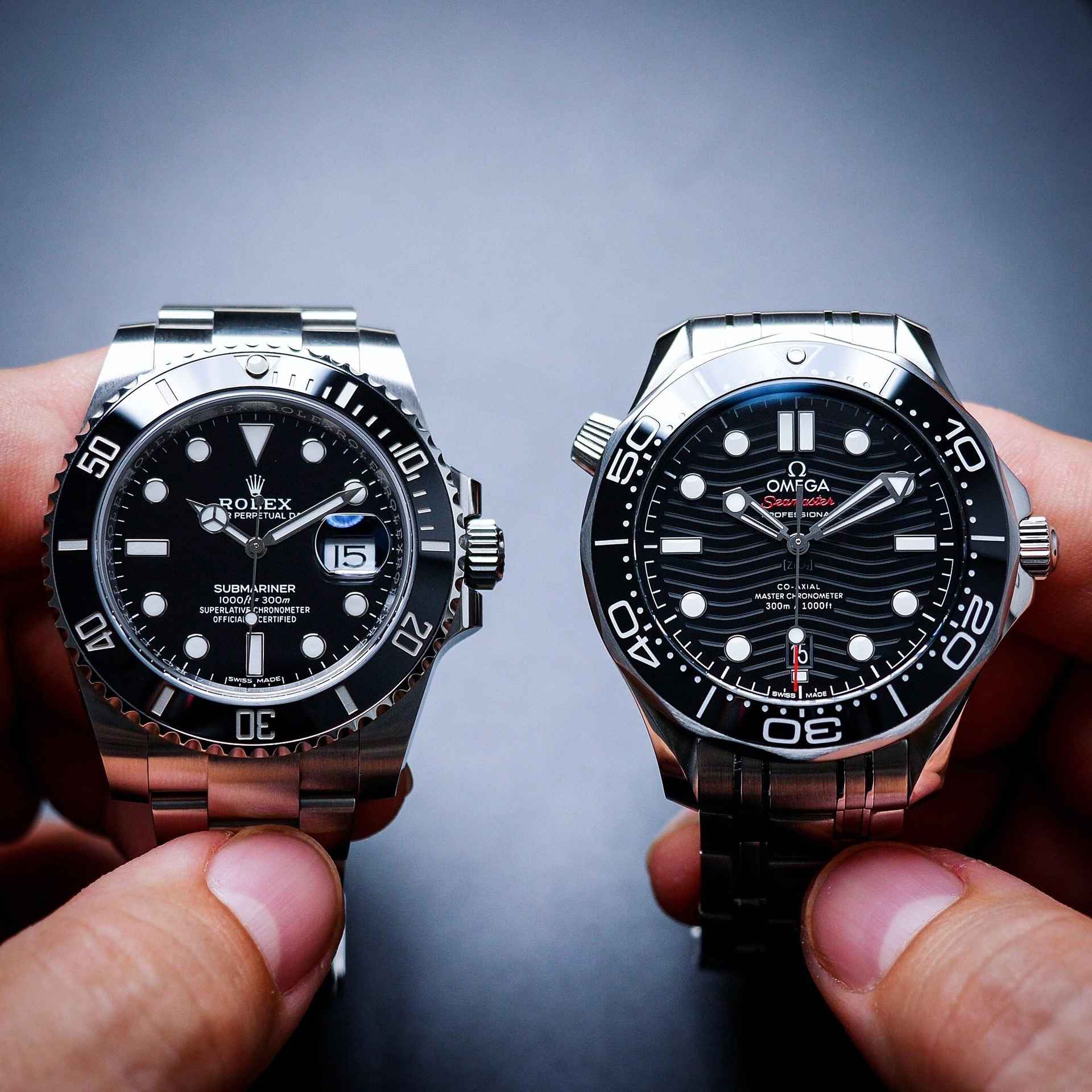
Omega replica vs rolex replica is a common question. Two Swiss giants, two massive clone ecosystems, and completely different engineering challenges for the factories producing them. Rolex has more factory options and a larger aftermarket. Omega has a more complex movement to clone. Both have watches that score above 9/10 in accuracy. But the details behind that score? Totally different. Let me break down exactly where each brand’s clone excels and where it falls short.
The Core Difference: Movement Architecture
Everything in the omega vs rolex replica debate starts with what’s inside the case. Rolex uses a free-sprung balance with Parachrom hairspring and Chronergy escapement. It’s traditional Swiss watchmaking — refined over decades, but mechanically conventional. Omega uses the co-axial escapement — a fundamentally different design with less friction and theoretically better long-term accuracy.
For clone factories, Rolex movements are easier to replicate. The free-sprung balance architecture has been cloned since the early 2000s. Multiple factories produce the VR3135 (Submariner, Datejust) and VR3235 (newer references). Competition has driven quality up and prices down. A VR3235 clone today runs ±3-5 sec/day out of the box — genuinely impressive.
Omega’s co-axial escapement was considered un-clonable until VSF cracked it. The DD8800 clone uses a modified escapement that mimics co-axial behavior without exact replication. It works — ±5-8 sec/day is the typical range — but it took longer to develop and fewer factories produce it. The factory scene for Omega is smaller than Rolex as a result.
Key Point: Rolex clones have a maturity advantage. More factories, more competition, more aftermarket parts. Omega clones are catching up fast but are still in a “VSF-or-nothing” world for the best quality. If factory diversity matters to you, Rolex wins this round.
In This Article
Case and Bracelet Quality: Head to Head
Outside the movement, the omega replica vs rolex replica battle shifts. Both brands use 904L stainless steel in genuine form. Clones from top factories use either 904L or 316L — and here’s where it gets interesting.
Clean Factory (the leading Rolex clone maker) uses actual 904L steel for their Submariner and Daytona clones. This gives a slightly whiter, harder steel finish compared to 316L. VSF (leading Omega clone maker) uses 316L for most models, which is fractionally softer but still excellent. In practical terms, neither will corrode, scratch significantly differently, or cause skin irritation. The 904L vs 316L difference is a marketing talking point more than a real-world distinction.
Bracelet quality is close between the brands. Clean Factory’s Submariner bracelet with glidelock clasp is considered the gold standard in clones — smooth micro-adjustment, solid endlinks, zero rattle. VSF’s Seamaster bracelet is excellent too — proper solid endlinks, correct taper, functional diver extension — but the glidelock-style clasp gives Rolex clones a slight ergonomic edge.
The Model Comparison: Flagship vs Flagship
Rather than abstract quality scores, let’s compare the actual watches people cross-shop:
Rolex wins more matchups — but not by much. The Seamaster 300M clone genuinely rivals the Clean Factory Submariner in overall quality. And the Speedmaster clone is the only game in town for a mechanical chronograph at this level — the Daytona clone exists but faces different challenges (integrated chronograph vs modular).
The Recognition Factor
This matters more than most people admit. Omega vs rolex replica — which draws more attention? Rolex is the most recognized watch brand on Earth. Everyone — watch collectors and non-collectors alike — knows the Submariner. The cyclops lens, the fluted bezel on the Datejust, the crown logo. This recognition is both an advantage (instant status) and a risk (more scrutiny).
Omega sits in a middle ground. Watch enthusiasts recognize it immediately. Regular people know the name but often can’t identify the model. A Seamaster on your wrist gets appreciative nods from watch people and polite indifference from everyone else. This lower profile means less scrutiny — fewer people trying to “authenticate” your watch with their eyes.
Real Talk: If you want a watch that people notice and recognize as expensive — Rolex clone. If you want a watch that watch people appreciate but doesn’t scream “LOOK AT MY WATCH” to the general public — Omega clone. This isn’t about which is “better.” It’s about what kind of attention you want.
Ceramic Bezel Quality
Both brands use ceramic bezels on their dive watches. The clone quality comparison is interesting:
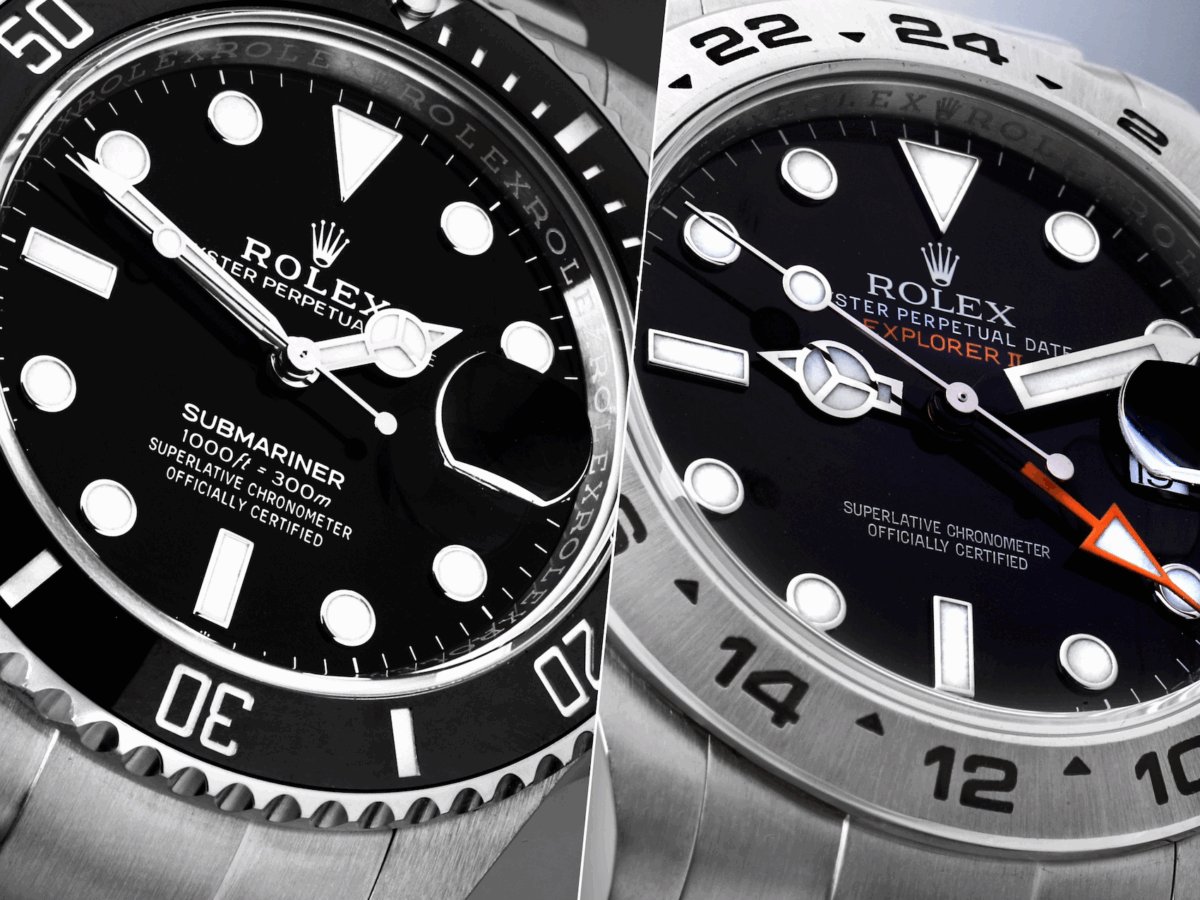
Rolex clone bezels (Submariner, GMT-Master): Clean Factory uses genuine ceramic inserts with either laser-etched or PVD-filled numerals. The “Pepsi” and “Batman” GMT bezels require precise blue-red or blue-black color transitions that are among the hardest details to clone. Current batches are excellent — the color fade point matches genuine within 1-2 degrees of rotation.
Omega clone bezels (Seamaster 300M, Planet Ocean): VSF produces ceramic bezels with properly filled markings. The Seamaster 300M bezel is simpler than a GMT Master — single color with Liquidmetal-filled numerals — and clone accuracy is very high. The wave pattern on some bezels adds complexity, but VSF handles it well.
Net result: both brands’ clones produce excellent ceramic bezels. Rolex clones face a harder challenge with multi-color bezels (GMT) but have solved it. Omega clones have simpler bezel designs that are easier to nail but include unique elements (Liquidmetal on Planet Ocean) that add their own difficulty.
Aftermarket and Service
This is where omega replica vs rolex replica shows its biggest gap. The Rolex clone aftermarket is enormous:
- Replacement parts: VR3135/VR3235 components are widely available — balance wheels, mainsprings, escapement parts. Any independent watchmaker familiar with Rolex can service them
- Aftermarket upgrades: Prof crystals, Clark dial refinishing, genuine Rolex compatible bracelets, aftermarket bezels — the upgrade ecosystem is deep
- Franken builds: Mixing genuine Rolex parts with clone parts is a whole subculture. Gen crown, gen crystal, gen bezel insert on a clone case = a “franken” that passes 95% of authentication
The Omega clone aftermarket is smaller but growing:
- Replacement parts: DD8800/DD8900 parts exist but fewer watchmakers are familiar with the architecture. Finding someone to service a clone co-axial requires research
- Aftermarket upgrades: Limited compared to Rolex. Some crystal and bezel upgrades available, but the “franken” culture is minimal
- Community: Omega clone discussions exist on forums but receive maybe 30% of the traffic that Rolex clone threads get
If long-term serviceability and upgradability matter to you, Rolex clones have a clear advantage. The omega or rolex clone question has a definitive answer here: Rolex. More parts, more watchmakers, more options for keeping the watch running for years.
Design Diversity
Rolex is conservative. The Submariner hasn’t fundamentally changed in 70 years. The Datejust added a few millimeters. The GMT got new bezel colors. Rolex evolves slowly and deliberately. This means if you want a Rolex clone, you’re choosing from established, well-known designs — but the options are relatively similar (diver, diver-GMT, dress, chronograph).
Omega takes more design risks. The Seamaster 300M has wave dials and ceramic. The Speedmaster has hesalite crystal and NASA heritage. The Constellation has integrated bracelets and griffes. The Planet Ocean has Liquidmetal. The De Ville has sapphire side panels. If you want design variety — watches that look genuinely different from each other — Omega offers more range.
This matters for the omega replica vs rolex replica decision because your second watch from each brand tells the story. A Rolex Submariner and GMT-Master II? Similar aesthetic, different bezel. An Omega Seamaster and Speedmaster? Completely different watches that share only a brand name. If you’re building a small collection, Omega offers more visual diversity from a single brand.
The Decision Framework
The Honest Answer
The omega vs rolex replica question doesn’t have one winner. Rolex clones are technically more refined — better movement accuracy, bigger aftermarket, more factory competition driving quality. Omega clones are more interesting — co-axial escapement, exhibition casebacks, unique designs that stand apart from the Rolex crowd.
If you already own a Rolex clone and want something different — get an Omega. The best Omega replicas deliver an experience that no Rolex can match: seeing a clone co-axial movement through a transparent caseback, wearing a Speedmaster with its Moon landing heritage, or picking a Constellation with its integrated bracelet that has no Rolex equivalent.
If you own zero clones and want your first — the Rolex Submariner (Clean Factory) remains the safest entry point in the entire hobby. It’s the most refined, most serviced, most discussed clone watch in history. But the Omega Seamaster 300M (VSF) is right behind it, and for the person who prefers being distinctive over being recognized, it might actually be the smarter choice.
FAQ: Omega Replica vs Rolex Replica
Which clone lasts longer?
Rolex clones have an edge in longevity because the VR3135/VR3235 movements are easier to service and parts are readily available. An Omega DD8800 is equally well-built but finding a watchmaker who can service a clone co-axial is harder. With proper care, both should run 3-5 years before needing a service. With a service, 8-10 years is realistic for either.
Are Omega clones catching up to Rolex clones?
Rapidly. Five years ago, the gap was significant — Rolex clones were clearly superior. Today, VSF’s Seamaster 300M stands toe-to-toe with Clean Factory’s Submariner. The remaining gap is in aftermarket diversity and factory competition, not in the watches themselves. Give it another 2-3 years and the gap may close entirely.
Can you wear both brands at the same social event?
Only if you have two wrists and zero shame. But seriously — owning both brands makes sense for a collection. Wear the Rolex for business meetings and industry events where recognition matters. Wear the Omega for dinners, travel, and watch-enthusiast gatherings where being different is valued. They serve different social functions.
Which brand holds more resale value as a clone?
Rolex clones retain slightly more resale value in the second-hand clone market because demand is higher. A used Clean Factory Submariner sells for 60-70% of its original cost. A used VSF Seamaster 300M sells for 50-60%. Neither is a “good investment” — buy whichever you’ll actually enjoy wearing.
Which should be my first clone watch?
If you want the safest, most proven choice: Rolex Submariner (Clean Factory). If you want something with more character and less public scrutiny: Omega Seamaster 300M (VSF). Both are excellent starting points. Just avoid buying both simultaneously — get one, wear it for a month, understand what you like and don’t like, then decide if you want the other brand as your second piece.
Final Verdict
The omega replica vs rolex replica debate has no universal answer — and anyone who tells you one brand is objectively “better” is selling something. Rolex clones are more mature, more serviced, and more recognized. Omega clones are more distinctive, more mechanically interesting, and more diverse in design. Your choice depends on what you value: status recognition (Rolex) or design individuality (Omega). Both ecosystems produce watches that regularly score above 9/10 in clone accuracy. The real question isn’t which brand is better — it’s which brand is better for you.